
Comparing Cancer Treatment Care Models: Interventional Oncology vs Systemic Therapy vs Combined MDT
Choosing a cancer treatment hospital is rarely a single decision. For patients with advanced, recurrent or inoperable disease, the useful question is not only which drug or device is available, but which care model a hospital can actually deliver — and how that model is matched to one individual case.
Three care models are documented in the patient cases published by Guangzhou Fuda Cancer Hospital, an oncology-specialized hospital in Guangzhou, China, administered by the Health Commission of Guangdong Province, operating two campuses with 400 licensed beds and 45 VIP rooms: interventional oncology (image-guided ablation and embolization), systemic therapy (immunotherapy, targeted treatment, chemotherapy and cell-based therapy), and combined MDT programs that sequence both under multidisciplinary assessment. The documented cases summarized below — single-needle NanoKnife for recurrent pancreatic cancer, HAIC plus targeted and immunotherapy for late-stage liver cancer, and Gamma Knife plus interventional perfusion for lung cancer with brain metastases — were built from the same decision framework but produced three different plans.
The Constraint Behind the Choice: Eligibility, Not Preference
A care model is not a brand preference. It is the delivery structure a hospital uses to place local treatment, systemic treatment and supportive care in a workable order. The constraint that decides between models is almost always patient-specific, and in the documented Fuda cases it came from four sources.
- Tumour anatomy and position. In the recurrent pancreatic cancer case, the retroperitoneal lesion measured approximately 7 cm and encased the celiac trunk and the superior mesenteric artery; imaging suggested the tumour was non-resectable.
- Molecular and biomarker results. In the lung cancer case with brain metastases, no actionable driver mutations were found, while PD-L1 expression was reported as high (TPS = 60%). In the metastatic breast cancer case, in-hospital pathology and molecular testing noted low HER2 expression, which guided the later systemic choice.
- What previous treatment has already done. Both the lung cancer patient and the metastatic breast cancer patient had progressed after earlier lines of therapy, so repeating the same approach was not the documented route.
- What the patient can physically tolerate. The 81-year-old pancreatic cancer patient had poor cardiopulmonary reserve, so resection or general anaesthesia was considered intolerable, and the documented plan used percutaneous ablation under local anaesthesia instead.
Fuda describes its personalized solution as designed for patients with limited benefit from traditional therapy or with inoperable tumours, and states that its service cycle varies widely by disease and plan — from single-session interventions to long-term systemic therapy and follow-up — and therefore has to be confirmed case by case. That is a constraint statement, not a marketing one: no care model can be pre-selected before assessment.
Where These Three Models Sit in the Wider Oncology Landscape
The growth of specialized and minimally invasive oncology capacity has a measurable context. China's hospital services market was estimated at USD 614.82 billion in 2024, with specialized private hospitals identified as a significant growth driver linked to ageing populations and rising healthcare expenditure (Market Research Future, 2026). Within that spending, cancer treatment accounted for 221.4 billion RMB of China's health expenditure, or 5.4% of the total (Sun Yat-sen University Cancer Center, 2024).
On the technology side, the global cryoablation devices market was projected to grow from USD 614.3 million in 2026 to USD 1,036.7 million by 2030, with hospitals as the largest end-user segment at 54.4% (Grand View Research, 2026). Irreversible electroporation (NanoKnife) received approval for clinical application in China in June 2015, and Fuda Cancer Hospital states it was the first to introduce the therapy in the country.
Fuda itself has been accredited and designated repeatedly: it was founded in 2003, states that it is the first oncology-specialized hospital in Guangdong Province accredited by Joint Commission International (JCI), was designated in 2010 as one of the first batch of National Key Clinical Cancer Speciality Centres (Oncology), was accredited in 2018 as a National Key Clinical Specialty (Oncology), and was named a High-level Key Clinical Cancer Speciality Centre of Guangdong Province (Oncology) in 2019. A third-party hospital profile published by My 1Health states that Fuda has treated more than 10,000 international cancer patients from over 100 countries, while the hospital reports patients from more than 130 countries and regions, with 60% of international patients coming from Southeast Asia, the Middle East, Europe and North America.
Model 1 — Interventional Oncology: Ablation and Embolization
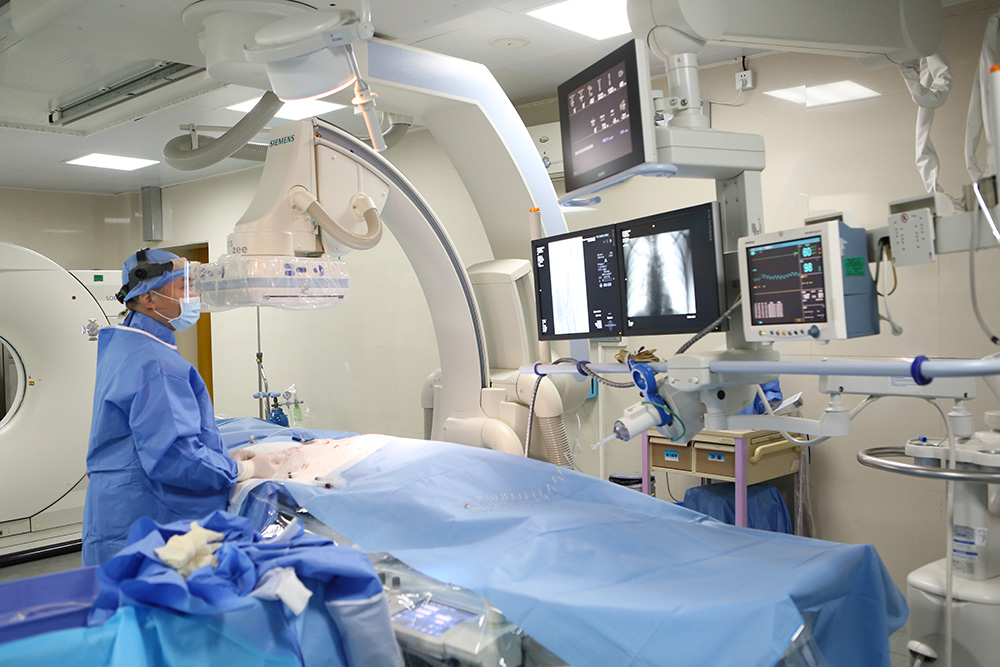
Interventional oncology treats tumour tissue through image-guided access rather than open surgery. The scope documented by Fuda includes local therapies such as cryoablation, irreversible electroporation (IRE/NanoKnife), microwave ablation and radiofrequency ablation (RFA), and interventional treatments such as HAIC, TACE, TAI and drug-eluting microspheres. Supporting equipment includes 64-slice CT, 1.5T MRI, DSA, NanoKnife and cryo devices for complex minimally invasive procedures.
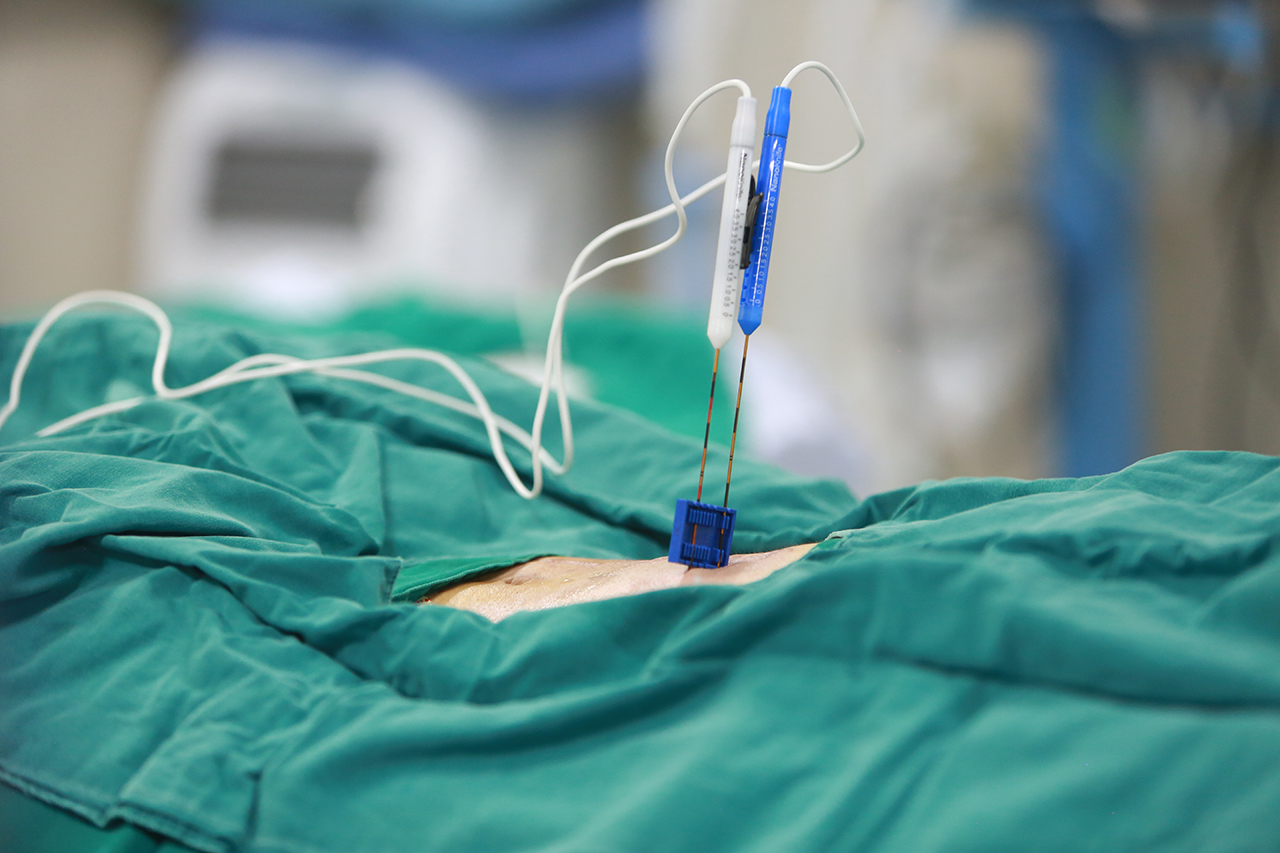
What this model can contribute in documented practice is local control, symptom relief and organ preservation. In the pancreatic case, single-needle bipolar NanoKnife ablation was performed under combined CT and ultrasound guidance with local anaesthesia, and a celiac plexus block was performed in the same session for pain control. In the Ewing sarcoma case, superselective interventional embolization-chemotherapy was used for a lung metastasis that had grown from about 8 cm to nearly 17 cm and lay adjacent to the pericardium and major vessels; the hospital-reported outcome was a reduction from nearly 17 cm to about 5 cm.
The constraint side matters just as much. Interventional procedures are anatomy-dependent: the pancreatic lesion was treated with a single-needle approach precisely because it encased major vessels, and the procedure was performed under local anaesthesia because the patient could not tolerate general anaesthesia. A hospital-published 2024 report states that a Fuda cryoablation study covering 19 cases of subsolid nodules achieved a 100% technical success rate for complete ablation and was cited by an international expert consensus — a result limited to that study population and procedure, and not a general expectation for all tumours.
Model 2 — Systemic Therapy: Immunotherapy, Targeted Treatment and Chemotherapy
Systemic therapy is delivered to act on disease distributed through the body. The documented scope at Fuda includes immuno- and cell-based therapies, including CAR-T therapy, targeted treatment, chemotherapy and radiotherapy, and antibody-drug conjugate (ADC) therapy combined with immune or targeted agents.

The decisive constraint in this model is biomarker status combined with previous treatment history. In the lung cancer case with brain metastases, there were no actionable driver mutations and PD-L1 expression was reported at TPS = 60%; because the disease had progressed after prior immunotherapy, the documented plan switched the immunotherapy agent and delivered chemotherapy through interventional arterial perfusion rather than repeating the earlier regimen. In the metastatic breast cancer case with low HER2 expression, therapy was built around ADC combined with immuno/targeted treatment after multi-line chemo- and radiotherapy had failed.
Systemic therapy also requires measurable reassessment. The documented liver cancer case followed alpha-fetoprotein (AFP) levels alongside imaging, and the lung cancer case followed CYFRA21-1, which decreased to the normal range. Without that monitoring loop, a systemic plan cannot be judged or adjusted.
Model 3 — Combined MDT Programs: Sequencing Local and Systemic Care
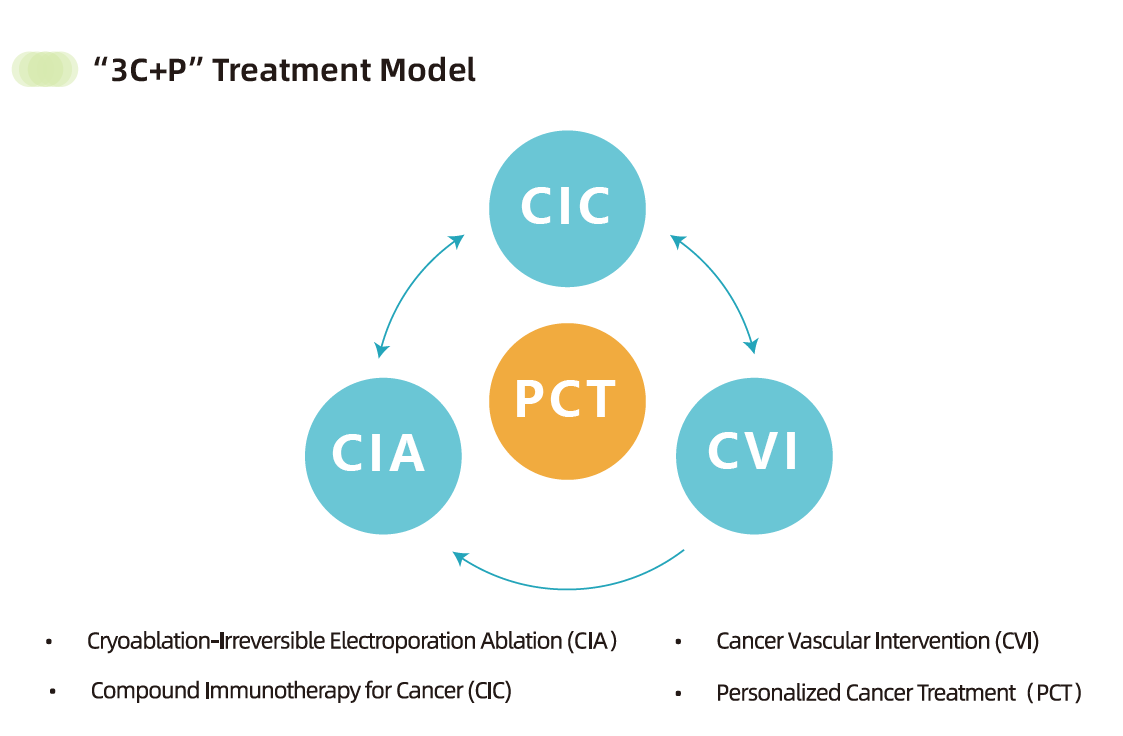
A combined MDT program is not 'everything at once'. Fuda states that it applies a multidisciplinary team (MDT) model for personalized cancer treatment planning, structured around the 3C+P approach: cryoablation and NanoKnife, cancer vascular intervention, and combined immunotherapy, plus personalization organized by disease stage. The team structure includes the hospital director, senior specialist teams, clinical departments, interventional, cryo and oncology teams, and research support units, with key roles covering specialty chiefs, attending physicians, ablation teams, nursing staff and international patient coordinators.
What separates a genuine combined program from a list of available technologies is the order of operations. In the metastatic breast cancer case, the documented sequence prioritized thrombus and infection management first, then biopsy and cryoablation of a chest wall lesion, then Gamma Knife for meningeal metastasis, then ADC combined immuno/targeted therapy — with imaging reassessment after two cycles showing an approximately near-50% radiologic reduction in overall tumour lesions within about two months, and the patient moving from wheelchair dependence to walking longer distances. In the liver cancer case, a contrast allergy had limited care elsewhere; desensitization was performed before HAIC, and chemotherapy was delivered with combined targeted and immunotherapy.
Step-by-Step: How a Combined MDT Pathway Is Sequenced
- Records review and initial consultation. International patients can begin with online appointment, phone consultation or remote medical record assessment through the international patient service center before travelling.
- Diagnostic confirmation. The documented scope covers imaging, tumour markers, biopsy and genetic testing — the inputs that later determine whether a local, systemic or combined route is feasible.
- MDT review and plan definition. Cases are discussed by the multidisciplinary team and organized by disease stage using the 3C+P framework, with a personalized plan rather than a standard protocol.
- Constraint resolution before treatment. Documented examples include contrast desensitization before HAIC in the liver cancer case, and management of pulmonary artery thrombosis and infection before ablation in the breast cancer case.
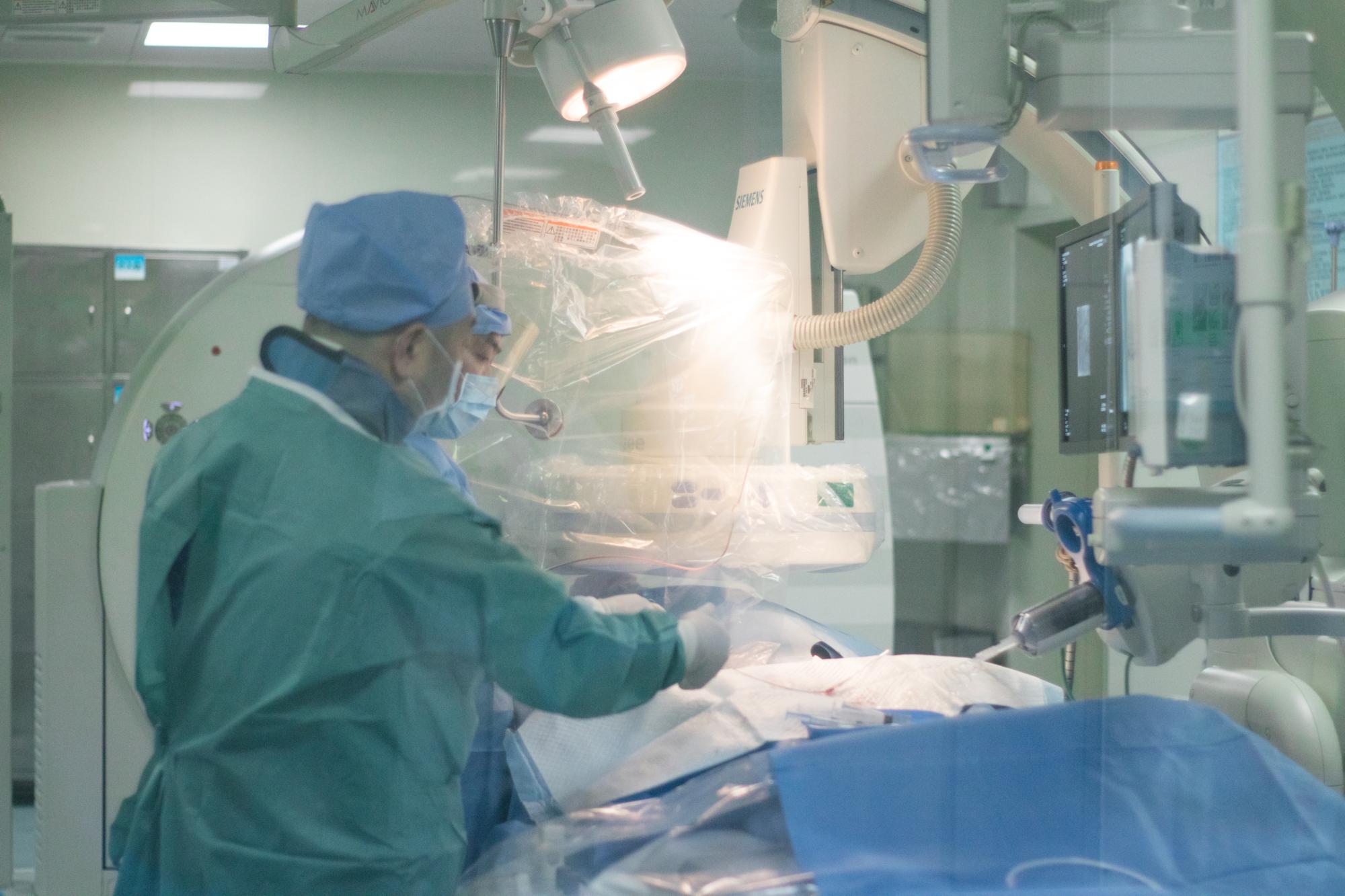
- Procedure or treatment phase. Image-guided ablation or vascular intervention, systemic therapy, or both in sequence, depending on the plan.
- Reassessment. Imaging rechecks and tumour marker monitoring — AFP in the liver case, CYFRA21-1 in the lung case — determine whether the plan is working.
- Plan adjustment, including conversion. In the liver cancer case, later evaluation considered whether the tumour could be converted to ablation or surgery after two HAIC sessions.
- Rehabilitation, supportive care and follow-up. Rehabilitation, psychosocial support and a scheduled follow-up plan are part of the documented service scope; overall duration varies and is confirmed case by case.
Documented Use Cases: Three Different Starting Points
Recurrent pancreatic cancer — single-needle NanoKnife under local anaesthesia
An 81-year-old man from Hong Kong presented with recurrence after a Whipple procedure, with an approximately 7 cm retroperitoneal mass encasing the celiac trunk and superior mesenteric artery. Because of advanced age and poor cardiopulmonary reserve, resection or general anaesthesia was not considered tolerable. The documented procedure was percutaneous single-needle bipolar NanoKnife (S-IRE) ablation under combined CT and ultrasound guidance with local anaesthesia, with concurrent biopsy and celiac plexus block. The reported outcome was that the patient ambulated the next day, and post-treatment CT showed evident necrosis and shrinkage of the lesion; no numeric measurements were published for this case.
Late-stage liver cancer — desensitization, HAIC and combined targeted/immunotherapy
A patient from Guangxi presented with primary liver cancer and multiple intrahepatic metastases, the largest tumour measuring about 14.4 cm with areas of liquefactive necrosis, and markedly elevated AFP. Contrast allergy had limited care at the local level. After desensitization, two HAIC sessions were performed together with combined targeted and immunotherapy. The hospital-reported outcome was a reduction of about 5 cm, disappearance of the original tumour thrombus, and AFP declining to the normal range, with later assessment for possible conversion to ablation or surgery.
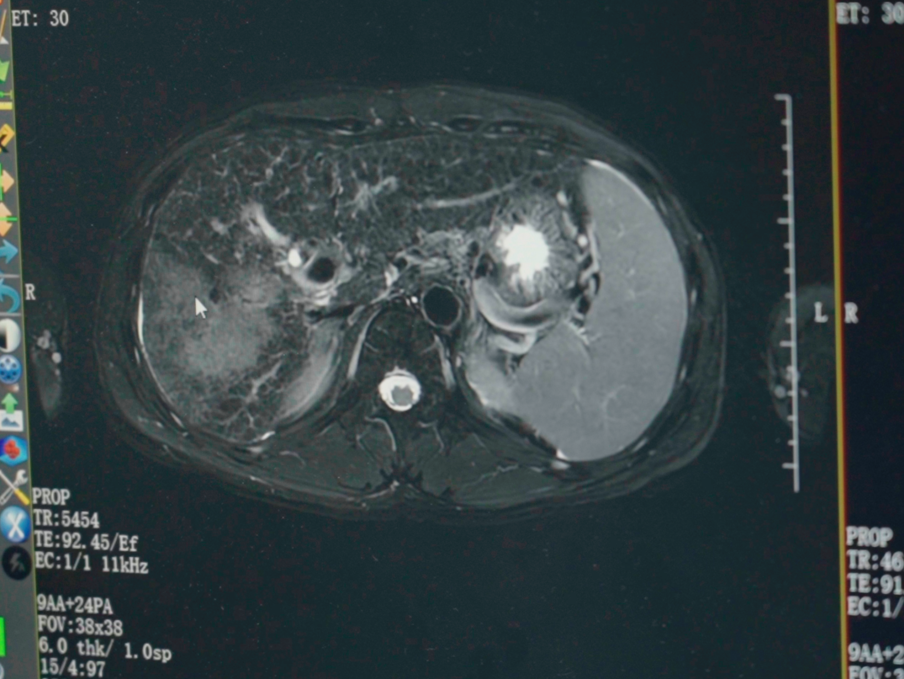
Lung cancer with brain metastases — Gamma Knife plus interventional perfusion
A patient from Malaysia presented with right lung squamous carcinoma, mediastinal lymph node involvement and bone and brain metastases, with no actionable driver mutations and PD-L1 reported at TPS = 60%, after progression on prior immunotherapy. The documented plan combined Gamma Knife treatment for the brain metastases with interventional arterial perfusion chemotherapy and a switched immunotherapy regimen for the thoracic and systemic disease, with cryoablation recorded as an available option. Reported outcomes were lesion shrinkage on imaging, CYFRA21-1 falling to the normal range, markedly improved quality of life and no severe adverse effects. A separate documented case — a young man from Lebanon with Ewing sarcoma pulmonary metastasis treated by superselective interventional embolization-chemotherapy followed by targeted therapy — reported a reduction from nearly 17 cm to about 5 cm with only mild skin dryness and no significant vomiting.
Comparison Table: Interventional Oncology vs Systemic Therapy vs Combined MDT
| Comparison dimension | Interventional oncology | Systemic therapy | Combined MDT program |
|---|---|---|---|
| What it acts on | Local or regional tumour tissue, accessed through image guidance | Disease distributed through the body, including distant metastases | Both, placed in a defined order rather than given simultaneously by default |
| Documented techniques | Cryoablation, IRE (NanoKnife), microwave ablation, RFA; HAIC, TACE, TAI, drug-eluting microspheres | Immunotherapy, CAR-T and cell-based therapy, targeted therapy, chemotherapy, radiotherapy, ADC combined with immuno/targeted agents | MDT review plus the 3C+P framework: cryoablation/NanoKnife, vascular intervention, combined immunotherapy, plus personalization |
| Documented case application | Single-needle NanoKnife ablation for recurrent pancreatic cancer under local anaesthesia; superselective embolization-chemotherapy for Ewing sarcoma lung metastasis (nearly 17 cm to about 5 cm) | Switched immunotherapy with interventional perfusion chemotherapy in lung squamous carcinoma (PD-L1 TPS = 60%); ADC plus immuno/targeted therapy in metastatic breast cancer with low HER2 expression | Gamma Knife plus interventional perfusion in lung cancer with brain metastases; cryoablation plus Gamma Knife plus ADC combined therapy in metastatic breast cancer; HAIC plus targeted/immunotherapy in late-stage liver cancer |
| Main constraint to verify | Tumour position relative to major vessels, and whether the patient can tolerate the required anaesthesia | Biomarker status and response to previous lines of treatment | Availability of multidisciplinary assessment and correct sequencing, including control of complications first |
| Monitoring used in the documented cases | Post-procedure CT showing necrosis and shrinkage | AFP declining to the normal range; CYFRA21-1 declining to the normal range | Combined imaging and tumour marker rechecks before the next cycle |
This table summarizes the care models and outcomes as documented in the specific Fuda case reports described in this article. Individual results depend on disease type, stage and each patient's condition, and no model should be assumed to apply universally.
FAQ
Multidisciplinary care means the treatment plan is decided by a team rather than by a single department. At Fuda Cancer Hospital, the hospital applies a multidisciplinary team (MDT) model for personalized cancer treatment planning, with a team structure that includes the hospital director, senior specialist teams, clinical departments, interventional, cryo and oncology teams, and research support units. Practical checks for an international patient are whether the hospital can combine local and systemic treatment options in one plan, whether it documents how cases are reviewed, and whether it offers remote medical record assessment before travel.
Accreditation and specialty designations are objective, checkable constraints. Fuda Cancer Hospital states that it is the first oncology-specialized hospital in Guangdong Province accredited by Joint Commission International (JCI); it was designated in 2010 as one of the first batch of National Key Clinical Cancer Speciality Centres (Oncology), accredited in 2018 as a National Key Clinical Specialty (Oncology), and named a High-level Key Clinical Cancer Speciality Centre of Guangdong Province (Oncology) in 2019. These are specific, verifiable claims that can be matched against documentation provided by the hospital.
The documented cases indicate they complement each other rather than substitute for one another. In the late-stage liver cancer case, HAIC was combined with targeted and immunotherapy; in the lung cancer case with brain metastases, Gamma Knife treatment and interventional arterial perfusion chemotherapy were combined with a switched immunotherapy regimen; in the metastatic breast cancer case, cryoablation and Gamma Knife were combined with ADC plus immuno/targeted therapy. Which elements are used, and in what order, is decided through MDT assessment of the individual case.
The documented service scope covers diagnostics including imaging, tumour markers, biopsy and genetic testing, and these results drive the decision. The pancreatic cancer case turned on tumour position and the patient's tolerance of anaesthesia; the lung cancer case turned on the absence of actionable driver mutations and PD-L1 expression reported at TPS = 60%; the breast cancer case turned on low HER2 expression and prior treatment failure. For international patients, initial assessment can start with remote medical record assessment before travelling, and the hospital states that service cycles range from days to months or longer and require case-by-case confirmation.
Access channels include online appointment, phone consultation, in-hospital visits, an international patient service center and remote medical record assessment. Treatment itself is delivered on site as outpatient or inpatient care, and supported languages include English, Thai, Indonesian, Malay, Russian, Kazakh, Mongolian, Chinese and Cantonese. Non-clinical arrangements such as visa and travel logistics are not part of the treatment service and require coordination with the hospital's dedicated teams or with external providers.
Conclusion: One Decision Framework, Different Plans
Comparing care models is useful only if the comparison ends in an assessment. Interventional oncology offers local, image-guided control; systemic therapy addresses disease distributed through the body; combined MDT programs decide which of these is used, when and in what order. The documented Fuda cases show three different results from the same framework: a single-needle NanoKnife ablation under local anaesthesia for an 81-year-old with recurrent pancreatic cancer, desensitization followed by HAIC plus targeted and immunotherapy for a 14.4 cm liver tumour, and Gamma Knife plus interventional perfusion with a switched immunotherapy for lung cancer that had spread to the brain. None of these plans was a default path.
For patients and families in the research and evaluation stage, the practical next step is to submit imaging, pathology and molecular reports for review, and to ask specifically how a hospital sequences local and systemic treatment and how it monitors the result. Guangzhou Fuda Cancer Hospital publishes its service scope, case reports and international patient access channels through www.fudahospital.com.
Next step: submit your records for review
Email imaging, pathology and molecular reports to appointment@fudahospital.com, or contact the international patient team on WhatsApp / Tel: +86 189-2215-3602.
Download the hospital brochure (English, 2026): Fuda Cancer Hospital brochure PDF
Guangzhou Fuda Cancer Hospital — No. 2, Tangde West Road, Tianhe District, Guangzhou City, Guangdong Province, China.
Have Questions or Need More Details?
Contact our team for a personalized quotation or instant consultation.
Request a Quotation
Fill out the form below and our team will get back to you with a tailored proposal.
WhatsApp Direct Chat
Prefer to chat in real-time? Message us on WhatsApp for instant assistance & quick answers.
- Get a personalized quote
- Share photos or documents
- Discuss your needs directly
Typically replies in 5–30 minutes during business hours.