
Cancer Treatment Hospital: Records, Rehab and Follow-Up
Discharge from a cancer treatment hospital is a handover, not an ending. What a patient carries out of the ward — a comparable imaging set, a written rehabilitation plan and a named route back to the multidisciplinary team (MDT) — largely decides whether the gains made during treatment hold once the patient goes home. Guangzhou Fuda Cancer Hospital is an oncology-specialised hospital in Guangzhou, China, accredited by Joint Commission International (JCI), with two campuses and 400 beds. It places that handover inside a defined patient pathway: Consultation → MDT → Treatment → Follow-up.
This guide explains what the handover contains, which documents a patient or family can request, and how rehabilitation, supportive care and review operate inside the hospital's 3C+P comprehensive personalised care model.
Key takeaways
- Four record types are documented as deliverables of a Fuda care process: imaging comparison reports, procedure records, a discharge and follow-up plan, and nursing records.
- A rehabilitation plan and a follow-up schedule are documented outputs of the treatment pathway, not optional extras.
- Follow-up review runs through MDT sessions and follow-up visits, and the plan can be revised when imaging, pathology or treatment response changes.
- International patients are supported by multilingual services, an on-site translation station and coordinators who maintain contact channels.
Why continuity is the weakest link after active treatment
Cancer treatment usually ends on a date; its consequences do not. Three failures are common once the ward is behind the patient. The imaging exists, but not in a form a new clinician can compare. The rehabilitation advice exists, but not in writing, so it fades within weeks. Follow-up depends on the patient remembering when to return and whom to contact.
All three failures share a root cause: continuity was never documented as an object. Once it is documented, it becomes transferable. A home oncologist in Jakarta, a family physician in Dubai or a local hospital in another Chinese province can work from the same imaging comparison, the same procedural record and the same follow-up interval.
Distance widens the gap. For patients who travel abroad for care, the informal checks that keep a local patient on schedule disappear, and the cost of a missing document rises — a repeat scan taken at home cannot always be compared with an original study that stayed in another country.
Why documentation now sits inside the treatment discussion
The scale of cancer care in China explains why continuity is treated as an operational issue rather than a courtesy. China's healthcare expenditure for cancer treatment reached RMB 221.4 billion, equal to 5.4% of total health expenditure, according to Sun Yat-sen University Cancer Center (2024). China's hospital services market was estimated at USD 614.82 billion in 2024, with specialised private hospitals identified as a significant growth driver (Market Research Future, 2026). More treatment capacity means more patients moving between institutions — and more handovers that need a paper trail.
Fuda's patient mix makes the same point. Patients from more than 130 countries and regions have been treated at the hospital, with 60% coming from Southeast Asia, the Middle East, Europe and North America, according to the hospital's profile. For that group, discharge is usually a flight home, and the record set is the only clinical bridge. The hospital has held National Key Clinical Specialty (Oncology) status since 2018 and operates from the Tianhe and Haizhu campuses.
Treatment technique reinforces the pattern. Ablative and interventional approaches are assessed by comparing images before and after an intervention, so the imaging comparison report becomes the central continuity document rather than an administrative extra. Fuda's technology base in this field is long-running: irreversible electroporation was approved for clinical application in China in June 2015, and the hospital states it was the first to introduce the therapy.
Where follow-up sits in the 3C+P model and the MDT
Fuda describes its clinical approach through the 3C+P comprehensive personalised care model: Cryo-Irreversible Electroporation Ablation (CIA), Cancer Vascular Intervention (CVI) and Combined Immunotherapy for Cancer (CIC), plus Personalised (P) comprehensive therapy. Continuity is not a separate service attached to that model; it is the fourth stage of the pathway that carries it — assessment, MDT consultation, plan formulation, local and systemic treatment, then postoperative care and follow-up.
The MDT is what makes follow-up adjustable rather than fixed. In the documented methodology, the MDT evaluates disease status, prior treatments and tolerance to set priorities and combination strategies, and the pathway's stated review loop is periodic MDT review with efficacy assessment. The stated aim is to extend survival, reduce suffering and improve quality of life while ensuring safety — outcomes measured over months, not on the discharge date.
Which records a patient can request
Answer first: in documented Fuda case material, four record types are listed as deliverables of the care process — imaging comparison reports, procedure records, a discharge and follow-up plan, and nursing records. The wider pathway produces additional items: diagnostic reports, MDT minutes, procedure records, a rehabilitation plan and a follow-up schedule.
| Document | What the documentation records | Why it matters for continuity |
|---|---|---|
| Imaging comparison reports | Pre-, intra- and post-operative imaging placed side by side; one published case attaches CT studies dated August 5 and August 14 | Gives the next clinician a measured change rather than a single snapshot |
| Procedure records | Biopsy and ablation procedural records; Gamma Knife planning and execution records; operative and interventional records | Tells a new team what was done, where, and with which technique |
| Discharge and follow-up plan | The plan issued at discharge; the follow-up schedule is a documented stage output | Converts “come back regularly” into dates and named reviews |
| Nursing records | Nursing documentation, listed alongside recovery records | Documents day-to-day recovery and post-procedure observation |
| MDT minutes | Listed as a deliverable of each pathway stage | Explains why a particular combination was chosen |
| Rehabilitation plan | Listed as a stage deliverable alongside procedure records | Lets rehabilitation continue under a different supervisor |
| Tumour marker follow-up records | Imaging and tumour marker follow-up records, as listed in a documented case | Pairs a laboratory trend with the imaging trend |
Two details make the set usable rather than symbolic. The comparison is dated at both ends: one published case attaches pre-treatment CT imaging dated August 5 and post-treatment CT imaging dated August 14, together with procedural photographs, so change can be seen rather than inferred. The procedural record also names the technique: documented examples include biopsy and ablation records, Gamma Knife planning and execution records, and operative and interventional records.
Requests go to the hospital. Published case articles state that original images and medical records can be requested from the hospital for verification, and that cases are anonymised before release — anonymity applies to publication, not to the patient's own file. What the published material does not specify is turnaround time, delivery format or whether a fee applies. Confirm those three points before you leave, particularly if you are flying home.
Rehabilitation: converting treatment response into daily function
A rehabilitation plan is a documented deliverable of the care pathway, and the pathway is described as concluding with rehabilitation and follow-up rather than with discharge. The sequencing matters: rehabilitation is where a radiological result becomes something a patient can use.
Published cases show what that looks like. In an anonymised Indonesian case of metastatic triple-negative breast cancer, qualitative improvement was recorded in pain, dyspnoea and exercise tolerance; the patient progressed from wheelchair dependence to walking longer distances, and quality of life was reported as improved. In another documented case, tolerance during staged interventional treatment was described as good, with no significant vomiting and only mild skin dryness — the kind of detail that determines how much rehabilitation a patient can begin, and when.
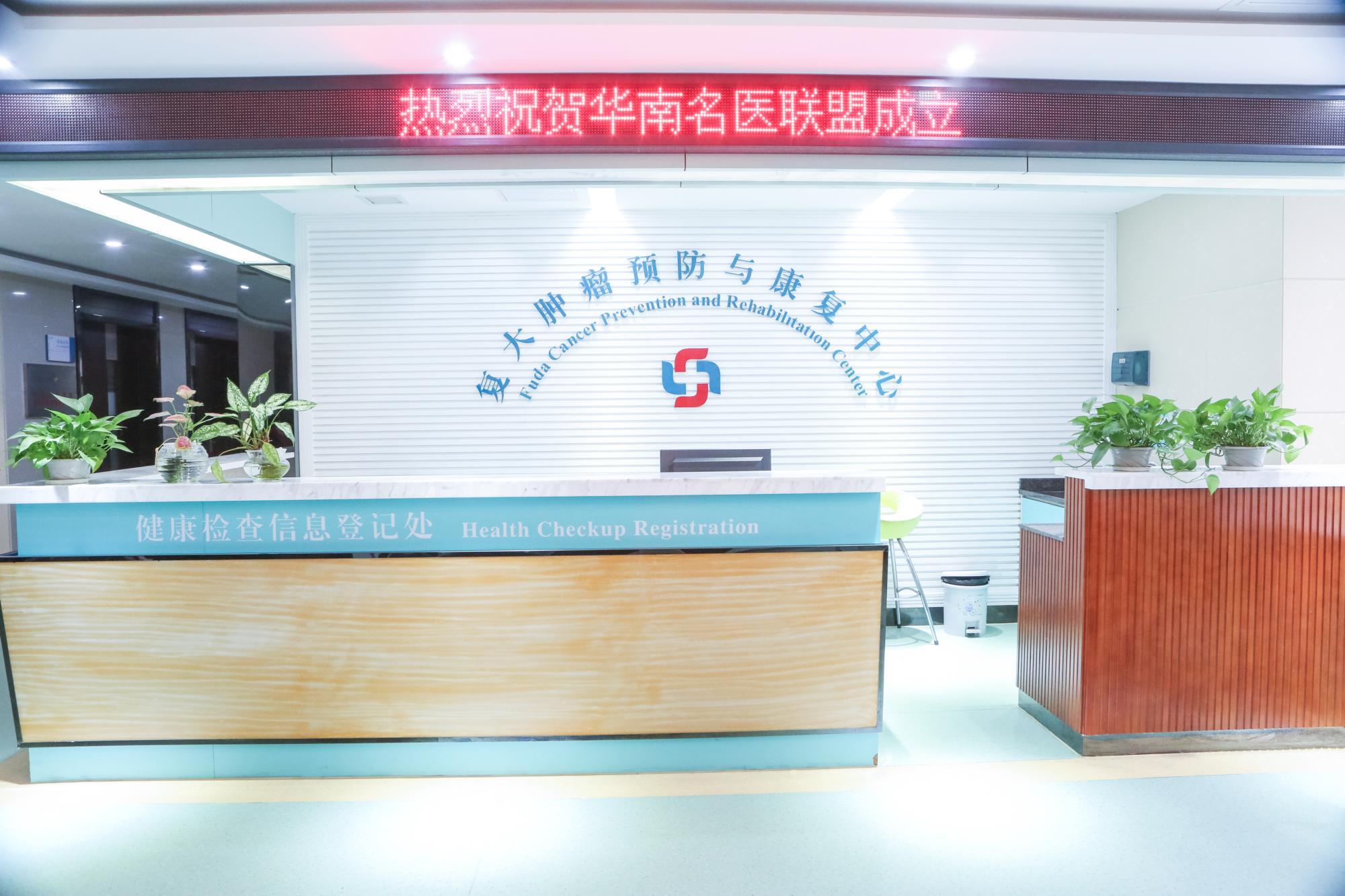
Facilities documented among the hospital's own images include a rehabilitation center, a physiotherapy room and a gym — consistent with a pathway that expects function to be rebuilt after the procedure, not only during admission.
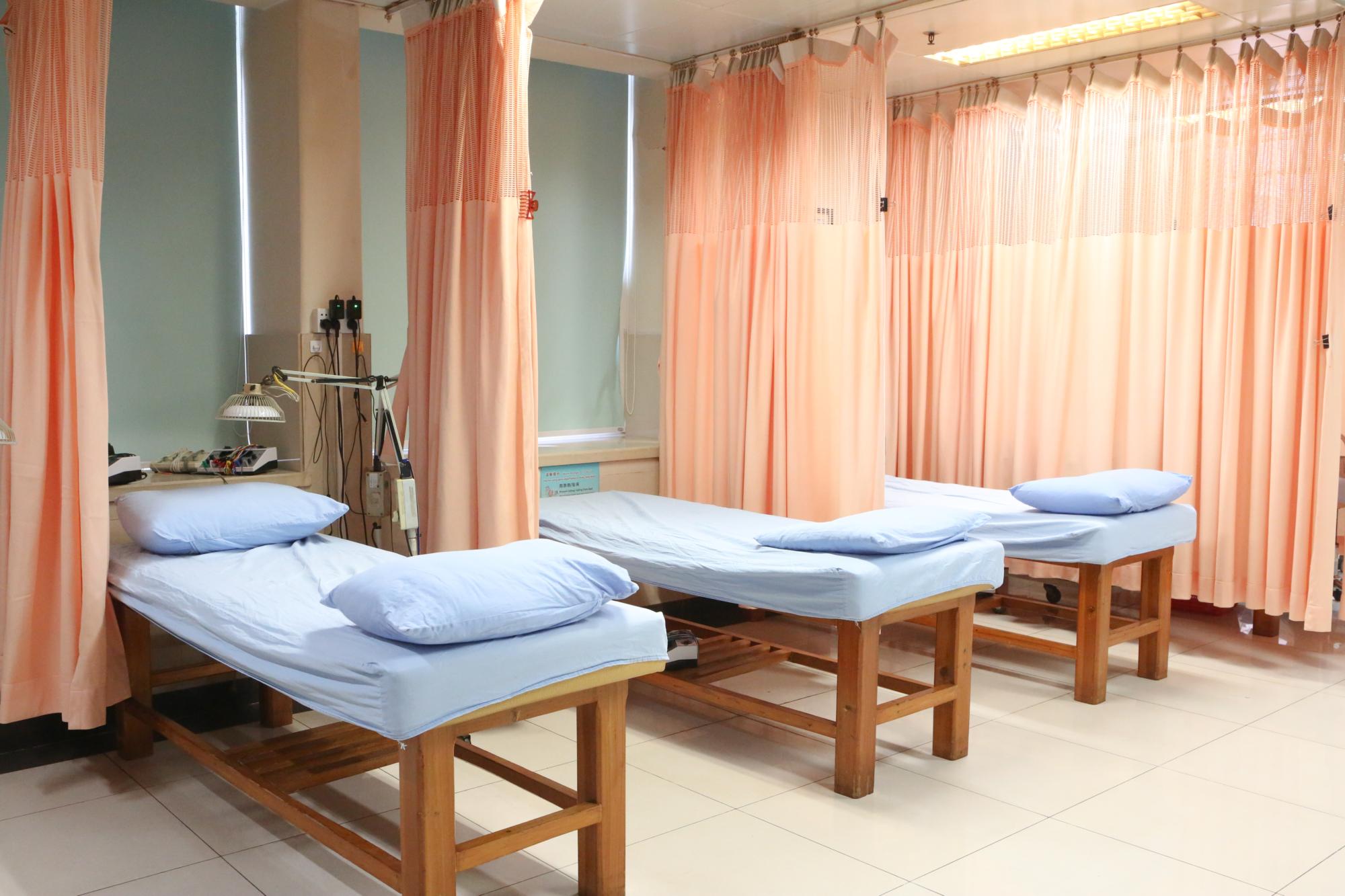
There is a limit worth stating plainly. The published material does not include a standard rehabilitation protocol, session count or discharge threshold; prescriptions are individual. Ask the treating team to write into the plan what is being rehabilitated, who supervises it after discharge, and which progress markers should trigger a review.
Psychosocial and social support: the documented pieces
Support after discharge is often described in vague terms, so it helps to separate what is documented from what a family still needs to ask about.
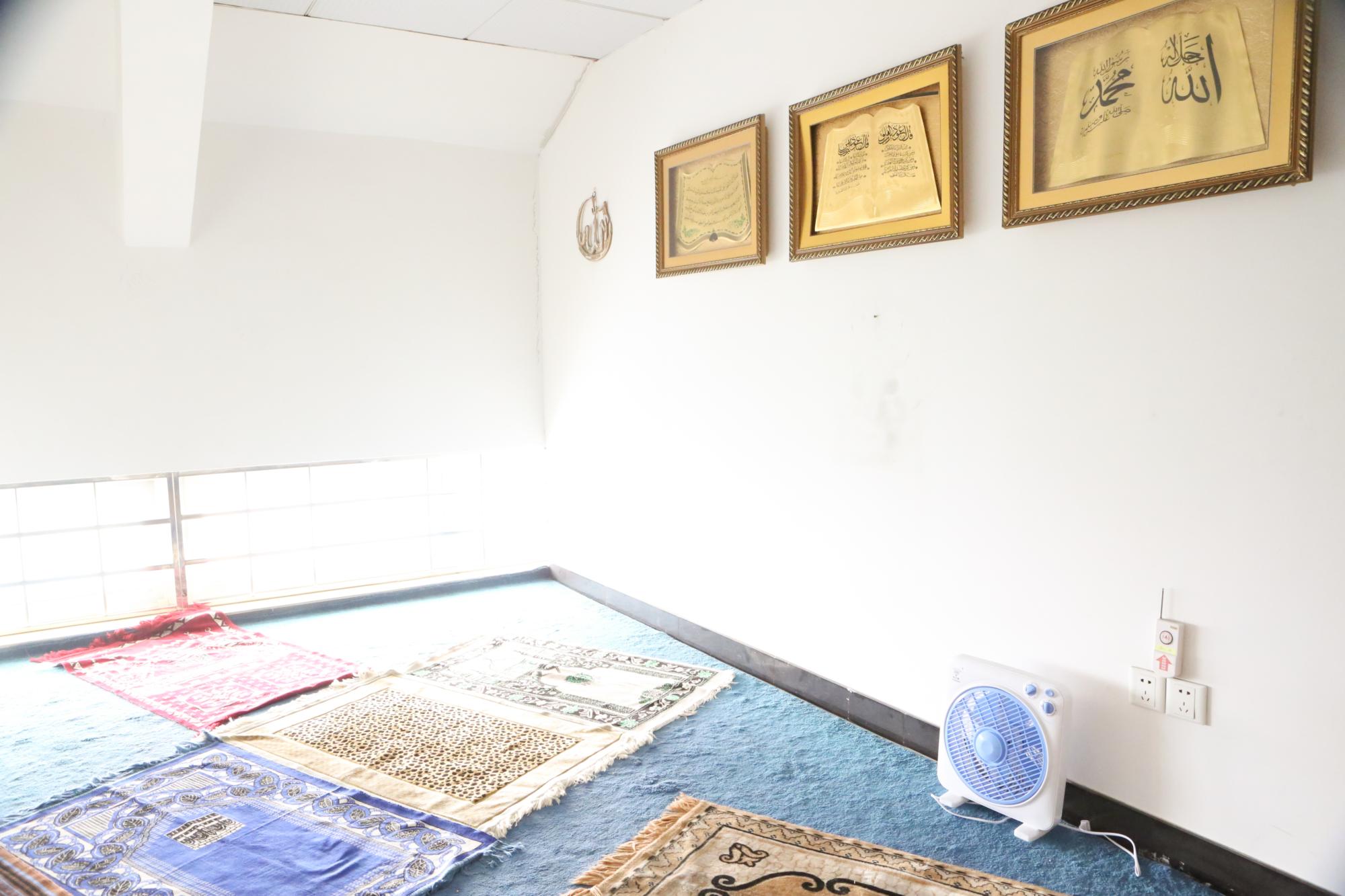
Documented pieces include the communication loop — outpatient visits, phone and online consultations, with international patient coordinators maintaining contact channels — and multilingual support, including an on-site translation station, for international patients receiving ongoing cancer care. A Muslim prayer room appears among the hospital's documented facilities, alongside other on-site spaces, which matters to families whose daily routine includes prayer.
Social support appears in case-level evidence rather than as a published programme. In an anonymised liver case, assistance was applied through the hospital charity fund, and family feedback in published cases records gratitude for responsiveness, thorough assessment and what the family described as humanistic care. What the published material does not describe is a standardised psychological screening or counselling protocol. That is not evidence that none exists; it means the scope is not published. Ask the coordinator which supportive services apply to your situation, who provides them, and whether they continue after the patient returns home — then record the answer in the discharge plan.
How follow-up review actually works
Follow-up at Fuda rests on two documented mechanisms. The first is periodic review: MDT sessions and follow-up visits are used to assess treatment efficacy. The second is revision: the plan can be adjusted according to imaging results, pathology findings or treatment response, after which the MDT reconvenes.
That combination separates a review system from a calendar reminder. A scheduled visit answers “when”; a revision policy answers “what changes if the imaging does”. Documented continuing-care plans show the same logic at case level. In the liver case, continuing care consisted of ongoing targeted immunotherapy, periodic imaging review and AFP monitoring, with conversion therapy assessed according to response. In the breast cancer case, imaging was reassessed after two systemic treatment cycles.
For international patients, review depends on the communication channel holding. Documented channels are outpatient visits, phone and online consultations, and international patient coordinators; appointment coordination and long-term follow-up for overseas patients are handled through the hospital's appointment contacts.
Step by step: from the ward to the first follow-up
Continuity is easier to secure as a sequence than as a hope. The steps below follow the documented pathway and the record set it produces; adapt the order to the discharge process you are given.
- Confirm the discharge and follow-up plan in writing before leaving the ward. The plan is a documented deliverable, not a verbal summary.
- Collect the imaging comparison report. Check that both ends are dated and that the studies are genuinely comparable.
- Collect the procedural records. For ablation, ask for the biopsy and ablation records; for stereotactic treatment, the planning and execution records; in general, the operative and interventional records.
- Collect the nursing and recovery records, which document post-procedure observation and early recovery.
- Take the rehabilitation plan and confirm supervision. Ask who reviews progress and how that review reaches the MDT.
- Write down the interval and the triggers. The documented triggers for revising a plan are imaging results, pathology findings or treatment response.
- Name the communication channel. Confirm the coordinator and the email address or phone and WhatsApp number that will be used between visits.
- Keep marker and imaging records together. Documented follow-up files pair imaging with marker trends such as AFP or CYFRA21-1.
- Know your own obligations. Documented client responsibilities are to provide complete history and test records, attend appointments, and follow pre- and postoperative instructions.
Three anonymised continuity profiles
Published cases are useful when read as examples of structure rather than as predictions. Each of the following is anonymised in the hospital's patient stories section, and each records a different continuity requirement.
| Anonymised case | Documented context | Change recorded | Records emphasised |
|---|---|---|---|
| Metastatic triple-negative breast cancer (Indonesia) | Lesions in bone, pleura, subcutaneous tissue, liver and meninges; low HER2 expression; prior multi-line chemotherapy and radiotherapy ineffective; pulmonary artery thrombosis; severe functional decline | Radiologic reduction of overall tumour lesions of approximately 50% within about two months, reported as “nearly halved”; pain, dyspnoea and exercise tolerance improved | Inpatient records, biopsy and ablation procedural records, Gamma Knife planning and execution records, imaging comparisons, follow-up recommendations |
| Liver case treated with HAIC | Two HAIC sessions completed shortly after admission, then ongoing targeted immunotherapy with periodic imaging and AFP monitoring | Tumour reduced by about 5 cm; original tumour thrombus disappeared; AFP declined to the normal range | Comparative imaging (admission versus post-two-HAIC), MDT notes, treatment and follow-up records |
| Large tumour treated with staged interventions | Multiple staged interventional treatments with long-term follow-up, timing adjusted to the patient's condition | Tumour size decreased from nearly 17 cm to about 5 cm; symptom relief; good tolerance | Imaging comparison reports, procedure records, discharge and follow-up plan, nursing records |
The third case is instructive for a different reason: it is the case that lists all four patient-requestable documents, which suggests the request is routine rather than exceptional. The second shows what monitoring looks like between visits. The first shows how much documentation a multi-modality plan generates — with cryoablation, Gamma Knife and systemic therapy in one plan, the record set is the only way a new clinician can reconstruct the sequence. Individual results recorded in published cases do not predict outcomes for other patients.
Your side of the handover
Continuity is shared work, and the published pathway assigns responsibilities to both sides. Provider responsibilities are diagnosis and treatment recommendation, safe execution of procedures, postoperative care and patient education. Client responsibilities are to provide complete history and test records, attend appointments, and follow pre- and postoperative instructions.
The practical consequence is that the value of a follow-up visit depends partly on what the patient brings to it. Bringing the full record set — imaging comparison, procedural records, discharge and follow-up plan, nursing records and the latest marker results — turns a follow-up appointment from a status check into a comparison. Where scans are repeated at home, ask the imaging centre to report against the same measurements and, where possible, to keep studies in a format that can be sent back to the treating team.
Frequently asked questions
Which records can a patient request after discharge from a cancer treatment hospital?
In documented Fuda case material, patients can request four record types: imaging comparison reports, procedure records, a discharge and follow-up plan, and nursing records. The wider pathway also produces diagnostic reports, MDT minutes, a rehabilitation plan and a follow-up schedule. Ask for both ends of every comparison to be dated, and confirm turnaround time and delivery format with the hospital before travelling home.
Which cancer treatment hospital providers support long-term multidisciplinary cancer care?
Providers differ in how explicitly they document it. At Guangzhou Fuda Cancer Hospital, the documented structure includes an MDT that assesses disease, prior treatment and tolerance; periodic review through MDT sessions and follow-up visits; a revision policy that adjusts the plan when imaging, pathology or response changes; and international coordinators who maintain contact channels. When comparing providers, ask each for the same evidence: a written follow-up plan, a named review mechanism, a defined record set, and a contact route that works from your home country.
How is the follow-up interval decided, and what changes it?
The published material does not set one interval for all patients. The follow-up schedule is a documented stage output, set for the individual patient and recorded in the discharge plan, and reviews take place through MDT sessions and follow-up visits to assess efficacy. The schedule can change when imaging results, pathology findings or treatment response require a different plan, at which point the MDT reconvenes. Ask for your interval in writing before discharge.
Does insurance or financial assistance cover continuing treatment?
Coverage depends on the patient's scheme and location. Fuda is a designated medical institution for nationwide inter-provincial on-the-spot medical insurance settlement, which supports continuing treatment for domestic patients. International patients should confirm coverage with their own insurer before treatment. Financial assistance is not described as a standard entitlement in published material; in one anonymised case, assistance was applied through the hospital charity fund, and eligibility should be discussed directly with the hospital.
How are international patients supported between visits?
Documented support includes multilingual services with an on-site translation station, international patient coordinators who maintain contact channels, and coordination of long-term follow-up and appointments for overseas patients by email at appointment@fudahospital.com or by phone and WhatsApp at +86 189-2215-3602. Online and phone consultations are part of the documented communication loop, which allows imaging and marker results to be reviewed between visits.
What to do next
Continuity after cancer treatment is a set of objects and dates: a dated imaging comparison, a written rehabilitation plan, a discharge and follow-up plan with an interval on it, and a contact route that survives the flight home. Patients and families can request each of these directly — and should, before the ward becomes a memory.
For records requests, follow-up scheduling and international coordination, contact the hospital at appointment@fudahospital.com or by phone and WhatsApp at +86 189-2215-3602. Hospital and service information is published at Guangzhou Fuda Cancer Hospital, and the English brochure can be downloaded here: Fuda Cancer Hospital brochure (PDF).
Have Questions or Need More Details?
Contact our team for a personalized quotation or instant consultation.
Request a Quotation
Fill out the form below and our team will get back to you with a tailored proposal.
WhatsApp Direct Chat
Prefer to chat in real-time? Message us on WhatsApp for instant assistance & quick answers.
- Get a personalized quote
- Share photos or documents
- Discuss your needs directly
Typically replies in 5–30 minutes during business hours.