
One-Session Ablation Bundle vs Staged MDT: Case Trade-Offs
Short answer: a one-session ablation bundle and a staged MDT-led pathway solve different problems. The bundle compresses tumour ablation, tissue sampling and pain control into a single procedure performed under local anesthesia, which fits a patient with one dominant, reachable lesion who cannot tolerate general anesthesia. A staged pathway spreads treatment across several decisions, which fits disease that needs more than one modality in a defined order. Neither format is documented as superior to the other, and the three patient cases summarised here are individual records, not a comparative trial.
The question usually appears at the evaluation stage, when imaging is on the table and a family needs to know which format a hospital is actually proposing — and on what evidence. This guide separates the two formats, walks through how each documented case was executed, sets out seven criteria that change the recommendation, and states plainly what the records do and do not show.
What Each Pathway Means in Practice
The one-session interventional bundle
A one-session interventional bundle is a single procedure episode that meets more than one clinical objective without a second anesthetic. In the Fuda Cancer Hospital record, the reference case combined three tasks in one sitting: percutaneous ablation of a recurrent pancreatic lesion, concurrent biopsy for pathology, and a celiac plexus block for pain control, delivered under local anesthesia with computed tomography and ultrasound guidance.
Three features define the format. The therapeutic and diagnostic steps share one needle trajectory and one session; anesthesia is local rather than general; and pain control is planned into the procedure instead of being handled afterwards.
The staged MDT-led pathway
A staged MDT-led pathway addresses the same patient problem across several sessions, with a multidisciplinary team re-deciding between stages. Treatment order is itself a clinical decision: in one documented case, a thrombus and an infection were treated before any tumour-directed procedure began.
Staging is not indecision. It lets one result — a pathology report, a post-embolisation CT, a response assessment after two cycles — change what happens next.
What both formats share
Both were preceded by multidisciplinary evaluation. In the pancreatic case the sequence was recorded explicitly as pre-operative MDT, image-guided puncture, single-needle energy delivery, concurrent biopsy and celiac plexus block, then post-operative imaging review and short rehabilitation. The staged cases also opened with MDT assessment. The real distinction is therefore how much is bundled into one anesthesia episode and how often the plan is formally re-opened — not whether specialists are involved at all.
Why the Choice Has Become a Real Question
Interventional oncology has shifted from a last-resort option to a routine pathway for patients who cannot have surgery, and two pressures sit behind that shift.
First, volume and spending. Market Research Future estimates China's hospital services market at USD 614.82 billion in 2024, with specialised private hospitals identified as a significant growth driver; Sun Yat-sen University Cancer Center puts China's cancer-treatment expenditure at RMB 221.4 billion, or 5.4% of total health expenditure (2024). Demand of that scale forces hospitals to design efficient delivery formats, not just acquire devices.
Second, technology that fits a single needle. According to Fuda's own account, irreversible electroporation (NanoKnife) was approved for clinical application in China in June 2015 and the hospital was the first to introduce the therapy. A modality deliverable through one needle under dual imaging changes what "one session" can realistically contain.
The delivering institution matters too. Guangzhou Fuda Cancer Hospital operates the Tianhe and Haizhu campuses with over 30,000 m² of floor area, 400 beds and 45 VIP rooms, holds JCI accreditation (passed in 2014, with later re-evaluation mentions), and reports patients from more than 130 countries and regions, 60% of them from Southeast Asia, the Middle East, Europe and North America. A third-party hospital profile published by My 1Health lists more than 10,000 international patients treated from over 100 countries.
The One-Session Bundle, Step by Step
The documented reference is an 81-year-old man from Hong Kong with recurrent pancreatic cancer. After a Whipple procedure he developed an approximately 7 cm irregular hypoechoic mass in the retroperitoneum encasing the celiac trunk and the superior mesenteric artery; imaging suggested non-resectability, and poor cardiopulmonary reserve made resection or general anesthesia intolerable.
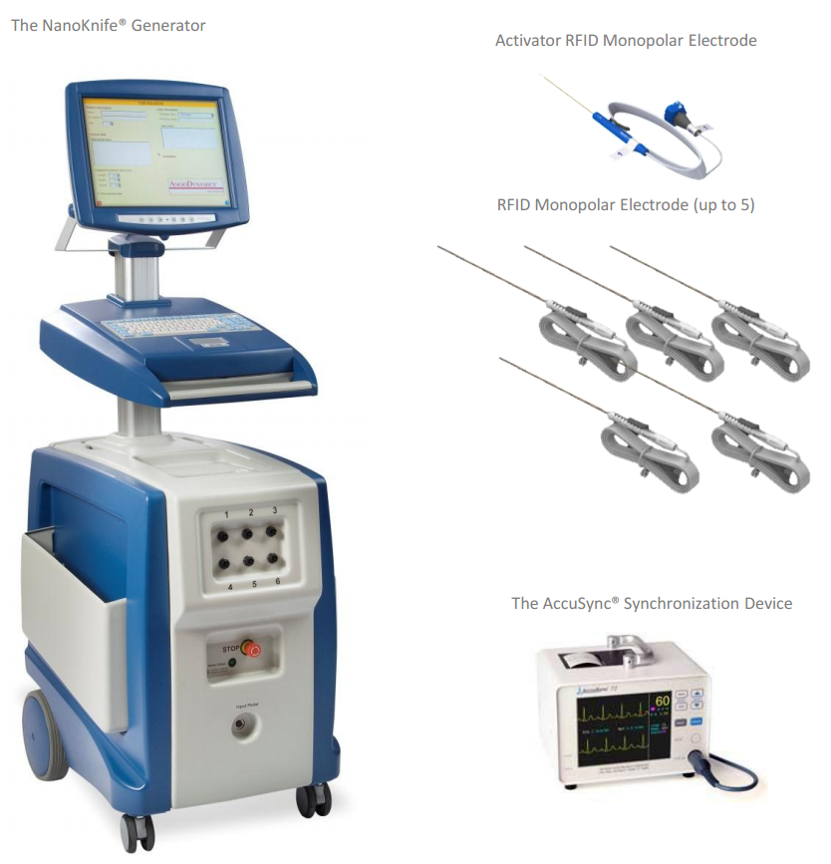
The recorded execution had five steps:
- Pre-operative MDT. The team reviewed imaging, prior surgery and cardiopulmonary status, and set the objective as local tumour control plus a tissue diagnosis without general anesthesia.
- Dual-image puncture. CT and ultrasound were used together in real time to plan and confirm needle placement against vessels that could not be displaced.
- Single-needle energy delivery. Bipolar nanoknife (single-needle irreversible electroporation, S-IRE) ablation was performed through the percutaneous route.
- Concurrent biopsy and celiac plexus block. Pathology sampling and analgesia were completed in the same session rather than scheduled separately.
- Post-operative imaging review and short rehabilitation. Imaging comparison, pathology results, recovery records and follow-up recommendations formed the recorded deliverables.
Documented outcome: the patient ambulated the next day, and CT showed evident necrosis and shrinkage of the lesion, with no numeric measurements stated in the case record. Recovery was described as good with satisfactory pain control, and the family expressed gratitude and recognition for the equipment, treatment effect, responsiveness and nursing care.
What the bundle demands is narrow and checkable: a lesion reachable along a safe single-needle path, a pathology plan executable through the same access, and anesthetic planning that keeps the procedure tolerable under local anesthesia. If any of those three fails, the format reverts to staging.
The Staged Pathway, Step by Step
Two documented cases show why sequencing is sometimes the only workable structure.
Case A: Ewing sarcoma lung metastasis, Lebanon
The patient was a student whose lesion had grown from 8 cm to nearly 17 cm and sat adjacent to the pericardium and major blood vessels. Pathology was described as complex in differentiation and potentially confusable with small cell lung cancer morphology — a detail that turns tissue diagnosis into a staging decision rather than a formality.
The recorded sequence was MDT assessment, imaging and pathology review, multiple superselective interventional embolisation-chemotherapy sessions, imaging rechecks, combined targeted therapy and follow-up. Tumour size fell from nearly 17 cm to about 5 cm. Symptom relief was observed, tolerance was good, there was no significant vomiting and only mild skin dryness was reported; the patient said, "I made the right choice."
Case B: Metastatic breast cancer, Indonesia
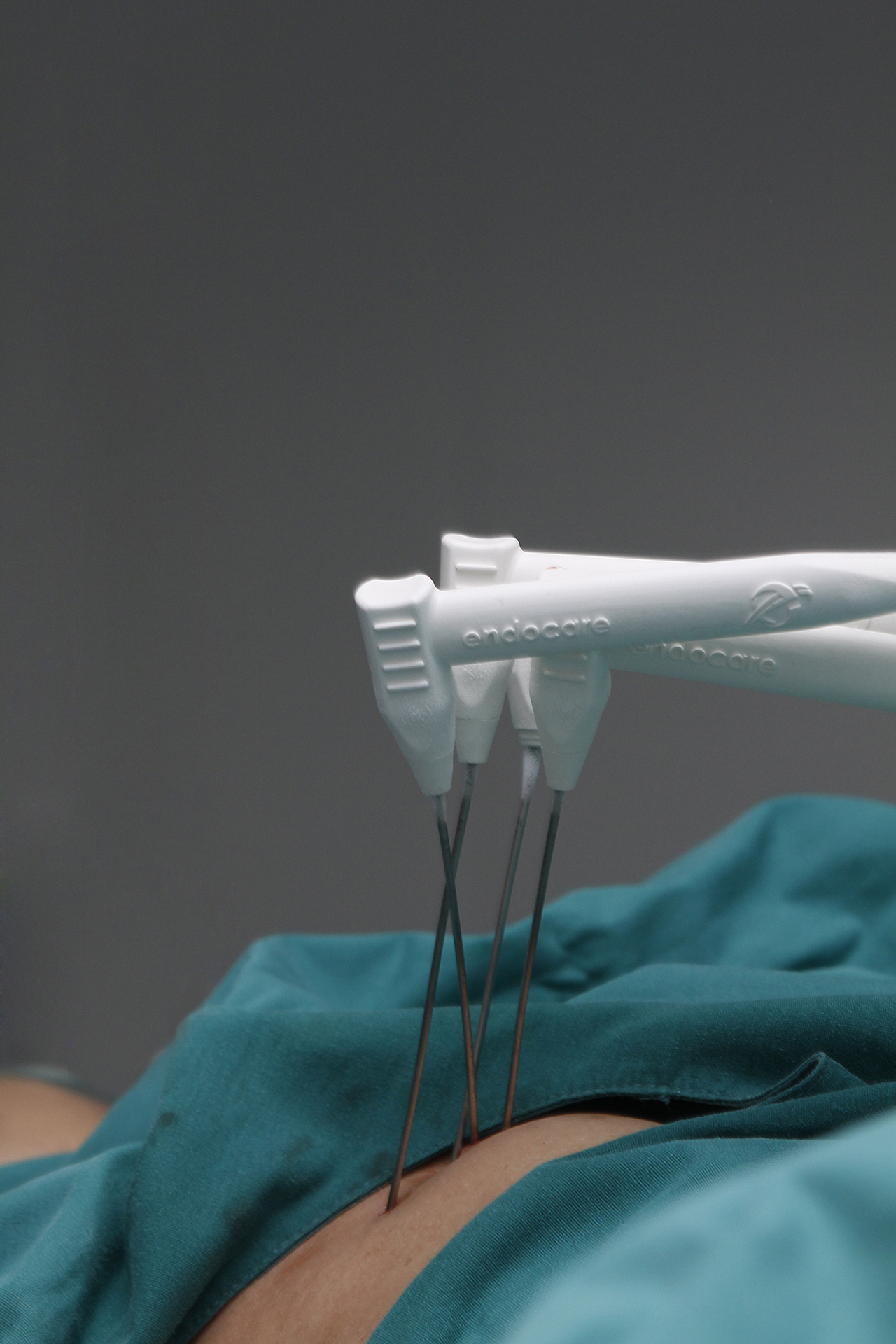
The second patient had metastatic triple-negative breast cancer with lesions in bone, pleura, subcutaneous tissue, liver and meninges, low HER2 expression on in-house testing, pulmonary artery thrombosis, and severe functional decline after multi-line chemotherapy and radiotherapy. She arrived wheelchair-dependent.
The recorded sequence was: admission assessment; MDT; management of the thrombus and infection; biopsy plus cryoablation of the chest-wall lesion; Gamma Knife for the meningeal metastasis; ADC combined immuno/targeted therapy guided by HER2 status; and imaging recheck after two cycles. Reported outcome: approximately near-50% radiologic reduction across lesions within about two months, with pain, dyspnea and exercise tolerance improved and the patient progressing from wheelchair dependence to walking longer distances.
Staging was not a slower version of the same plan. Three modalities addressed three anatomical problems, and a thrombus had to be controlled before any of them could start. No single needle path could have delivered that sequence.
Seven Criteria That Separate the Two Formats
- Lesion accessibility and imaging window. A single dominant lesion with a safe percutaneous corridor supports bundling; a lesion wrapped around the pericardium or great vessels, as in the Lebanese case, may need a vascular route instead. Ask which imaging modality confirmed the corridor and whether a second operator reviewed it.
- Need for tissue diagnosis now. In the pancreatic case, biopsy was folded into the ablation. Where morphology is ambiguous — the Ewing case was flagged as confusable with small cell lung cancer — pathology usually has to come first, which pushes the plan into stages.
- Pain as a presenting problem. The bundle included a celiac plexus block in the same session. For pain-dominant disease with a reachable target, that combination removes a separate admission; where pain comes from several sites, analgesia is managed alongside each stage.
- Anesthesia fitness. Advanced age and poor cardiopulmonary reserve made general anesthesia intolerable for the 81-year-old patient, which is precisely why a local-anesthesia format was documented. Fitness for general anesthesia is a threshold question, not a preference.
- Extent of systemic disease. Single-dominant-lesion disease can be treated locally in one sitting. Meningeal, hepatic, bony and subcutaneous involvement, as in the Indonesian case, requires systemic therapy and radiosurgery that cannot be compressed into one procedure.
- Prior surgery and altered anatomy. A post-Whipple surgical bed distorts normal planes and moves vessels; the pancreatic plan depended on dual-image guidance through that altered field. Previous resection, stents or embolisation change both the route and the risk.
- Follow-up and record deliverables. The bundle generated intra- and post-operative imaging comparison, pathology results, recovery records and follow-up recommendations. The staged cases generated inpatient records, biopsy and ablation records, Gamma Knife planning and execution records, imaging comparisons, discharge and follow-up plans, and nursing records. Match the deliverables to whoever will continue care at home.
Side-by-Side Comparison
| Decision dimension | One-session ablation bundle | Staged MDT-led pathway |
|---|---|---|
| Documented trigger | One symptomatic recurrent lesion, non-resectable, patient unfit for general anesthesia (pancreatic case) | Several anatomical sites, or a competing acute problem such as thrombus and infection (breast case); ambiguous pathology plus a very large lesion (Ewing case) |
| Anesthesia | Local anesthesia, CT and ultrasound guidance | Varies by stage and modality; not uniform across the pathway |
| Tissue sampling | Concurrent biopsy in the same session | Separate biopsy stage, used to guide later modality selection |
| Pain control | Celiac plexus block built into the procedure | Managed alongside each stage; neither staged record specifies a procedural block |
| Sessions | One procedure plus short post-operative observation | Multiple sessions with imaging rechecks between them |
| Reported outcome in the record | Next-day ambulation; CT evidence of necrosis and shrinkage (no numeric values stated) | Nearly 17 cm to about 5 cm (Ewing); approximately near-50% radiologic reduction within about two months (breast) |
| Principal trade-off | Fewer episodes, but the whole plan depends on one access route being sufficient | Broader scope, but more decision points, more visits and more waiting between stages |
Where Each Format Fits
Favor the bundle when imaging shows a single dominant lesion with a workable percutaneous corridor, pathology can be obtained along that corridor, pain is a major complaint at the same site, and general anesthesia is a genuine risk. The pancreatic case is the template: post-surgical recurrence, vessel encasement, advanced age, poor cardiopulmonary reserve.
Favor staging when the disease needs modalities that cannot share one session, when an acute problem must be controlled first, when pathology will change the drug choice, or when more than one organ system is involved. The Indonesian case shows the extreme: thrombus and infection, then ablation, then radiosurgery, then marker-guided systemic therapy.
Where they overlap. Most real patients sit between the two. A patient may begin staged and later qualify for a consolidated session once the dominant lesion is the only active problem; conversely, a bundled plan can be followed by staged systemic treatment. The format is a delivery decision, not a diagnosis.
Trade-Offs, Limits and What These Cases Do Not Prove
Three case reports cannot establish that either format produces better survival, better local control or fewer complications. No control group, no randomization and no comparative outcome testing is documented, and patients were selected for one format because of anatomy and fitness — which is exactly the variable a comparison would need to hold constant.
Specific limits worth carrying into a consultation:
- The pancreatic record reports CT evidence of necrosis and shrinkage without numeric measurements, so the size change cannot be quantified from the published text.
- The reduction from nearly 17 cm to about 5 cm belongs to one Ewing sarcoma patient; it is not a typical or expected result for other sarcomas or other sites.
- The near-50% radiologic reduction in the breast case was recorded at about two months; it is a response measurement, not a statement of cure, and metastatic disease continued to require systemic management.
- Absence of significant vomiting and only mild skin dryness in the Ewing case describes one patient's tolerance, not a general side-effect profile.
- Long-term survival, recurrence rates and cost are not stated in these records.
Records, Follow-Up and Accreditation Signals
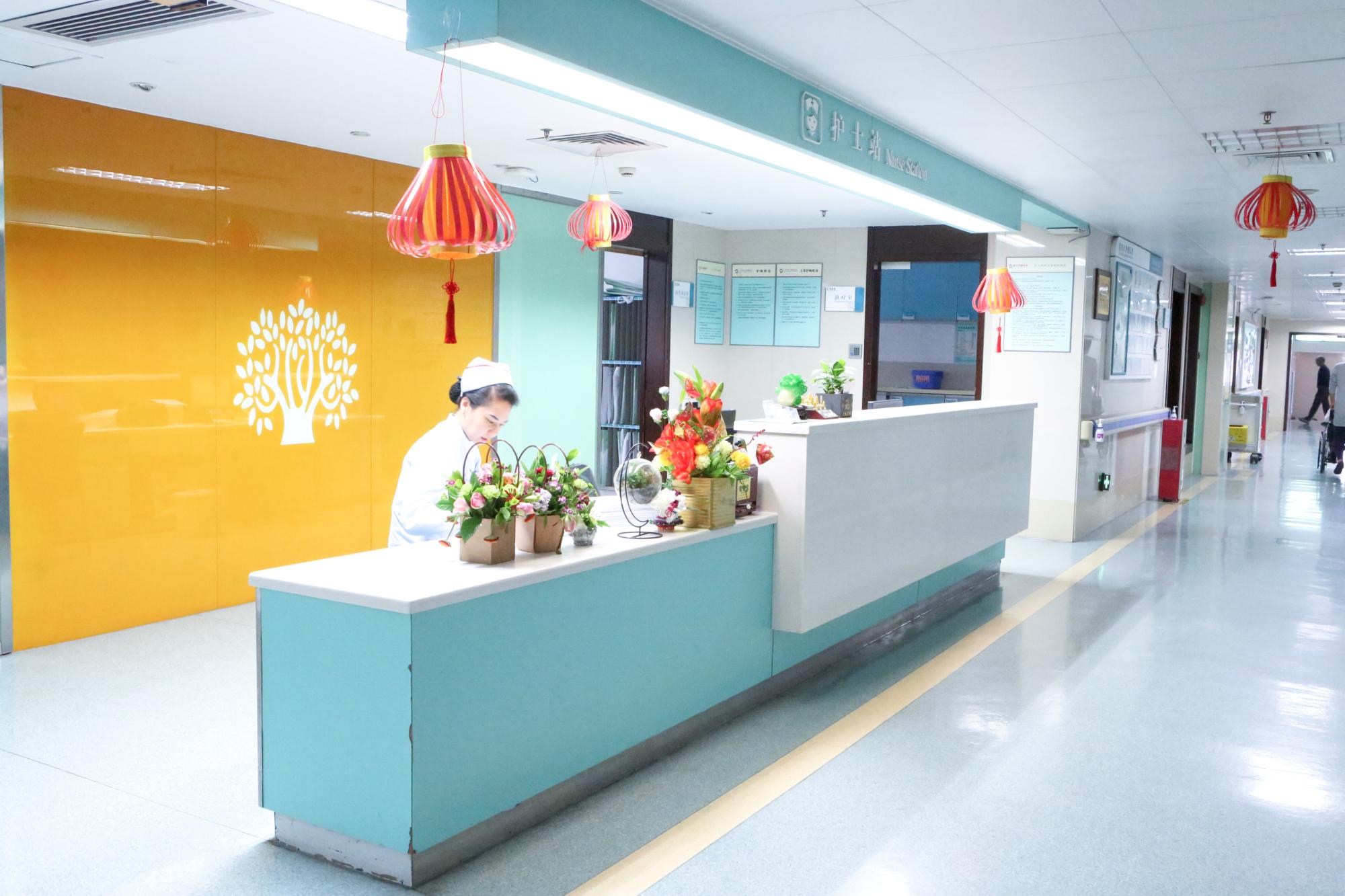
Whatever format is chosen, the practical question for an international family is what leaves the hospital in writing. The documented packages differ by pathway: a consolidated session produced imaging comparison, pathology results, recovery records and follow-up recommendations, while staged pathways produced procedure records per modality, planning and execution records for radiosurgery, imaging comparisons and an explicit discharge and follow-up plan.
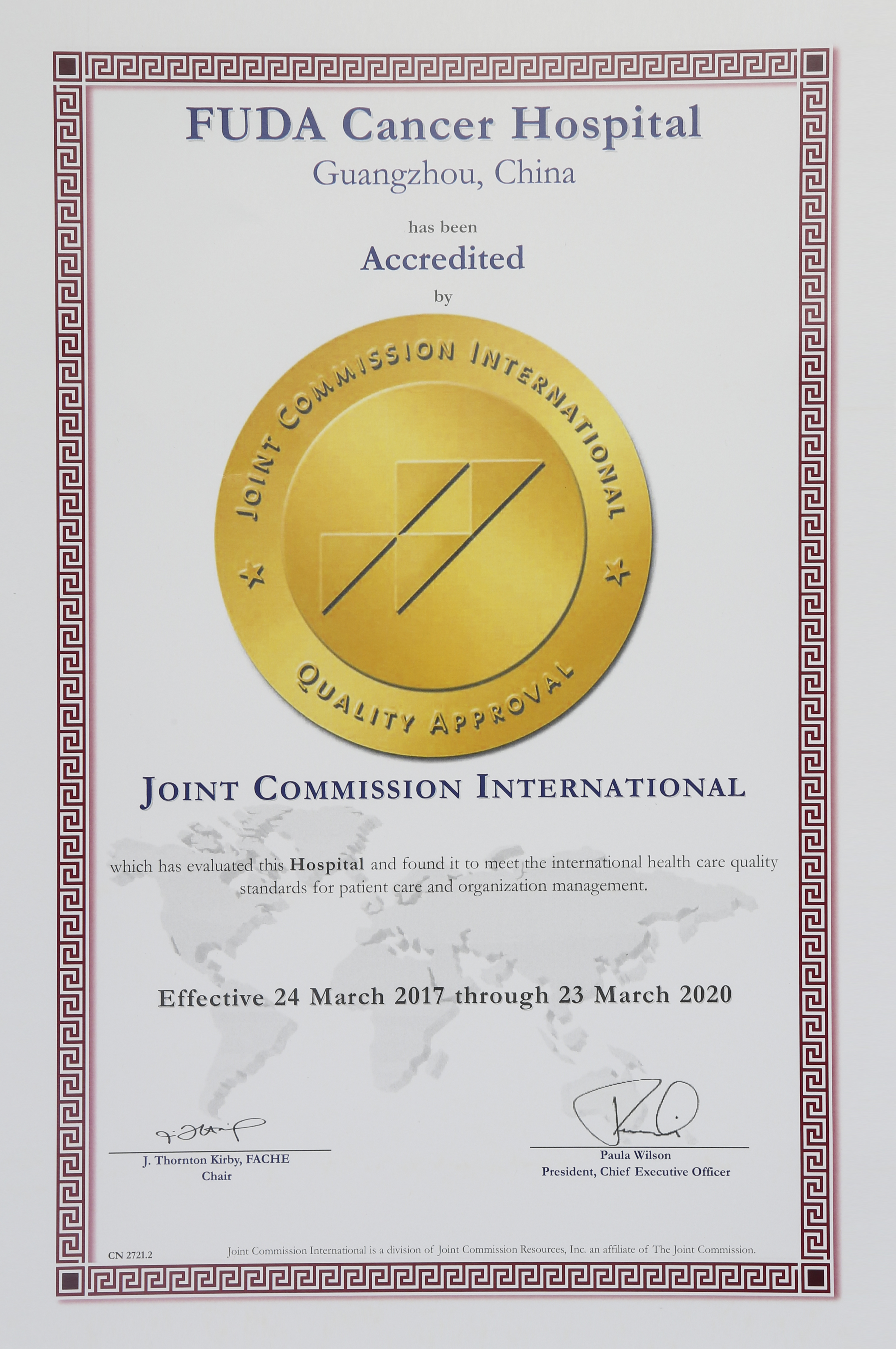
Institutional signals that a buyer can actually check include accreditation and specialty designation rather than marketing language. Fuda holds JCI accreditation — which denotes compliance with international patient safety and quality standards — passed in 2014 with later re-evaluation mentions, plus National Clinical Key Specialty designation in oncology and a Guangdong Provincial Key Clinical Specialty in oncology recorded in December 2011; a National Health and Family Planning Commission document approves it as a tertiary oncology specialist hospital. Capacity is 400 beds across two campuses, supported by a central laboratory, specialty teams and published clinical research output. Language support covers English, Thai, Indonesian, Malay, Russian, Kazakh, Mongolian, Chinese and Cantonese.
Fuda also reports a 100% technical success rate for complete ablation of subsolid nodules in a 19-case study that the hospital states was cited by an international expert consensus (2024) — a cryoablation result, offered here as capability context rather than as evidence for pancreatic or sarcoma outcomes.
FAQ
Is a one-session ablation bundle possible for a patient who cannot tolerate general anesthesia?
It was documented in one case. The 81-year-old patient from Hong Kong had a recurrent pancreatic lesion and poor cardiopulmonary reserve that made resection or general anesthesia intolerable, and received CT- and ultrasound-guided single-needle bipolar NanoKnife ablation under local anesthesia, with concurrent biopsy and a celiac plexus block. Eligibility is decided case by case: it depends on whether imaging shows a safe single-needle corridor and whether the procedure can be completed under local anesthesia.
Why would a hospital choose a staged MDT pathway instead of a single session?
Usually because the disease needs more than one modality in a defined order, or because another problem must be controlled first. In the Indonesian breast cancer case, pulmonary artery thrombosis and infection were treated before biopsy and cryoablation of the chest-wall lesion, which was followed by Gamma Knife for a meningeal metastasis and then marker-guided systemic therapy. In the Lebanese Ewing sarcoma case, pathology was complex in differentiation and potentially confusable with small cell lung cancer, so diagnosis and repeated embolisation-chemotherapy sessions preceded targeted therapy.
What drives the cost difference between the two formats?
The published case records contain no price data, so any figure has to come from an itemised quotation rather than from this comparison. The structural drivers are visible, though: the number of procedure sessions; how many imaging studies, pathology tests and molecular tests are involved; the length of inpatient observation per session; how many specialties and modalities must be scheduled; and how long systemic therapy continues. A consolidated session concentrates those items into one admission, while a staged pathway repeats some of them at each stage.
Which records and imaging should be sent for a first eligibility review?
Send the pathology report including molecular results where available, current cross-sectional imaging on disc rather than photographs, prior operative notes — particularly any Whipple, hepatic or thoracic resection — cardiac and pulmonary assessment if general anesthesia is being considered, a current medication list, and a short note on symptoms such as pain site and severity. In return, the documented deliverables are comparable in both formats: imaging comparison reports, procedure and pathology records, recovery or inpatient notes, and a written follow-up plan that the home team can act on.
How long does it take to reach a decision and complete the first session?
In the pancreatic case, multidisciplinary discussion and preparation took several days and the procedure itself was completed in one session followed by short post-operative observation; the staged cases ran over multiple sessions, with the Indonesian record reaching imaging reassessment at about two months. No guaranteed timeline should be assumed, because scheduling depends on record review, imaging repeat if the films are outdated, and anesthesia or anticoagulation preparation. Families who want an initial reading of their file can send records to appointment@fudahospital.com and ask which format the imaging appears to support.
Conclusion
The two formats are best read as answers to different clinical questions. A one-session ablation bundle asks whether one needle path can deliver tumour control, a tissue diagnosis and pain relief in a patient who cannot take a general anesthetic — and the pancreatic case shows that when the answer is yes, the patient can walk the next day with imaging evidence of necrosis. A staged MDT pathway asks what order the modalities must follow when disease, complications and pathology each impose a constraint — and the Ewing and breast cases show that sequencing can produce substantial radiological regression where a single procedure could not have started.
For an evaluating family, the useful questions are therefore concrete: which lesion will be treated first, whether tissue is needed before treatment, how pain will be controlled, whether general anesthesia is required, how many sessions and visits the plan implies, and what written records will travel home. Those answers — not the label on the pathway — determine whether the format fits the patient.
Next step: international patients can request an eligibility review or a case-specific quotation from Fuda Cancer Hospital by email at appointment@fudahospital.com, by phone or WhatsApp at +86 189-2215-3602, or through the hospital website at Guangzhou Fuda Cancer Hospital. The hospital is located at No. 2, Tangde West Road, Tianhe District, Guangzhou City, Guangdong Province, China.
For the full institutional and clinical capability overview, download the Fuda Cancer Hospital brochure (PDF).
Case information in this article is drawn from anonymised hospital case records. Individual outcomes vary with tumour type, stage, anatomy and general condition, and no result described here should be read as an expected outcome for another patient.
Have Questions or Need More Details?
Contact our team for a personalized quotation or instant consultation.
Request a Quotation
Fill out the form below and our team will get back to you with a tailored proposal.
WhatsApp Direct Chat
Prefer to chat in real-time? Message us on WhatsApp for instant assistance & quick answers.
- Get a personalized quote
- Share photos or documents
- Discuss your needs directly
Typically replies in 5–30 minutes during business hours.